

Open Access
What is Open Access?
Open Access (OA) is an international initiative to provide permanent, immediate and free access to the full text of publicly funded science and research results on the Internet. Texts published under open access can be copied, reproduced, printed, duplicated and searched without specific legal, financial or other restrictions.
OA is a response to the significant impact of the Internet on the dissemination of information and scientific knowledge and provides an alternative to the traditional publishing model of commercial publishers.
Types of Open Access
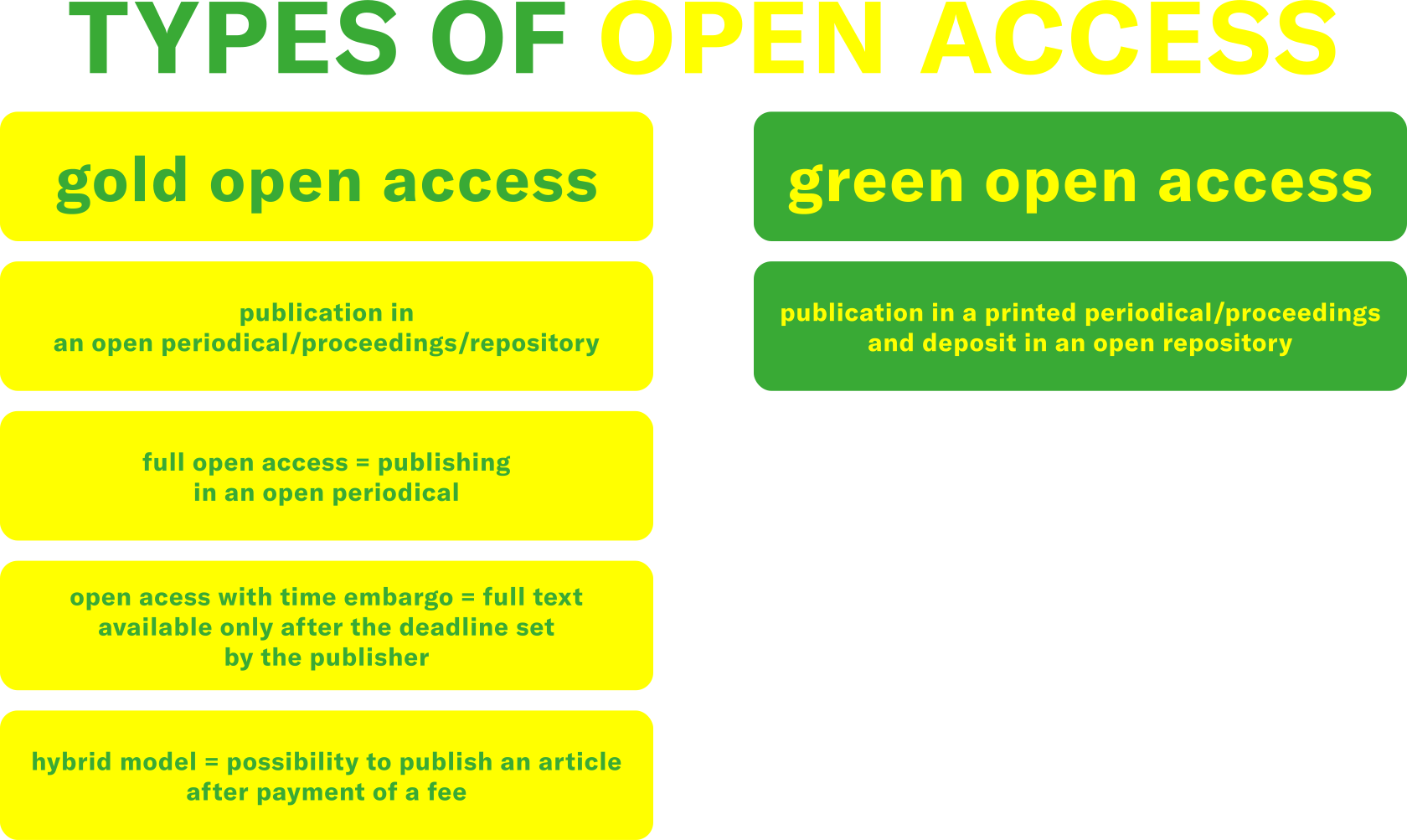
Neither green nor gold publishing means that the author avoids the peer-review process or the normal publishing process, and it is not self-publishing.
Just like publishing in traditional journals, open access publishing is also associated with publishing fees (article processing charge/article publishing charge). Most publishers publish the amount of the fee on their websites. In the context of OA, the OpenAPC project has been set up to publish fees for open access publishing from universities and research organizations. A number of these institutions also set up their own publishing support fund and APCs are an allowable cost in many research projects.
Why Open Access?
The primary goal of open access is to ensure rapid, barrier-free communication of scientific knowledge and thus enable faster development of scientific collaboration.
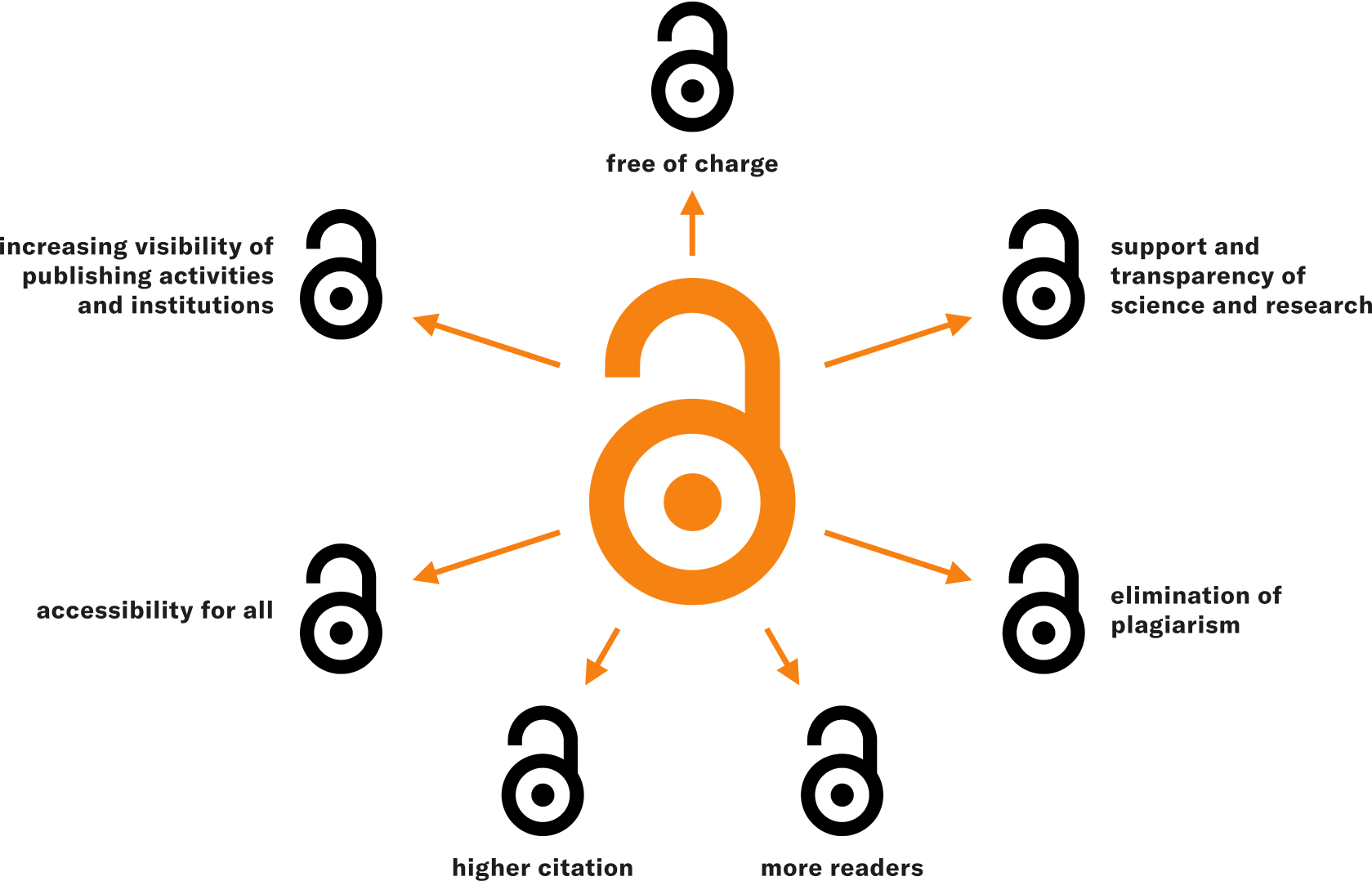
For guidance on how to make the results of your publishing work visible, see Pavla Rygel's publication Otevřený přístup: jak zviditelnit výsledky své vědecké práce.
Worried about open access? Read Myths about open access.
More about Open Access
Presentations on Open Access:
- presentation "Open Access (nejen) na ZČU" (.ppt, Czech only)
- presentation "DOI, Similarity Check, Open Science" (.pdf, Czech only)
You can send your questions about Open Access to digknih@uk.zcu.cz.